White-Tailed Kite Habitat Use Study (2022 – Present)

The White-Tailed Kite is a raptor that was nearly brought to extinction in the early part of the 20th century due to hunting and egg collections. It was listed as a protected species in the state of California and began making a recovery. In recent years, however, their population is starting to dwindle again- likely due to habitat loss, land use changes, and the use of rodenticide. The UCI Ecological Preserve represents one of the last active territories for this species in the county. We are combining behavioral observations with habitat modifications, rodent sampling, and gps tracking technology to study the habitat needs of this species. In order to see if vegetation height affected hunting success, we mowed dense patches of invasive black mustard (brassica nigra) in the grassland below the preserve. We are also conducting rodent surveys to see if mowing affects the movement patterns and habitat use of prey species. We hope these efforts will inform conservation efforts for this species and help it continue to thrive in Orange County.
Have you seen a white-tailed kite at the Ecological Preserve? Let us know here: https://survey123.arcgis.com/share/b806a7005fdc4feabda940dce983b860?open=menu)
Wildfire Safety and Healthy Habitats (2019-Present)
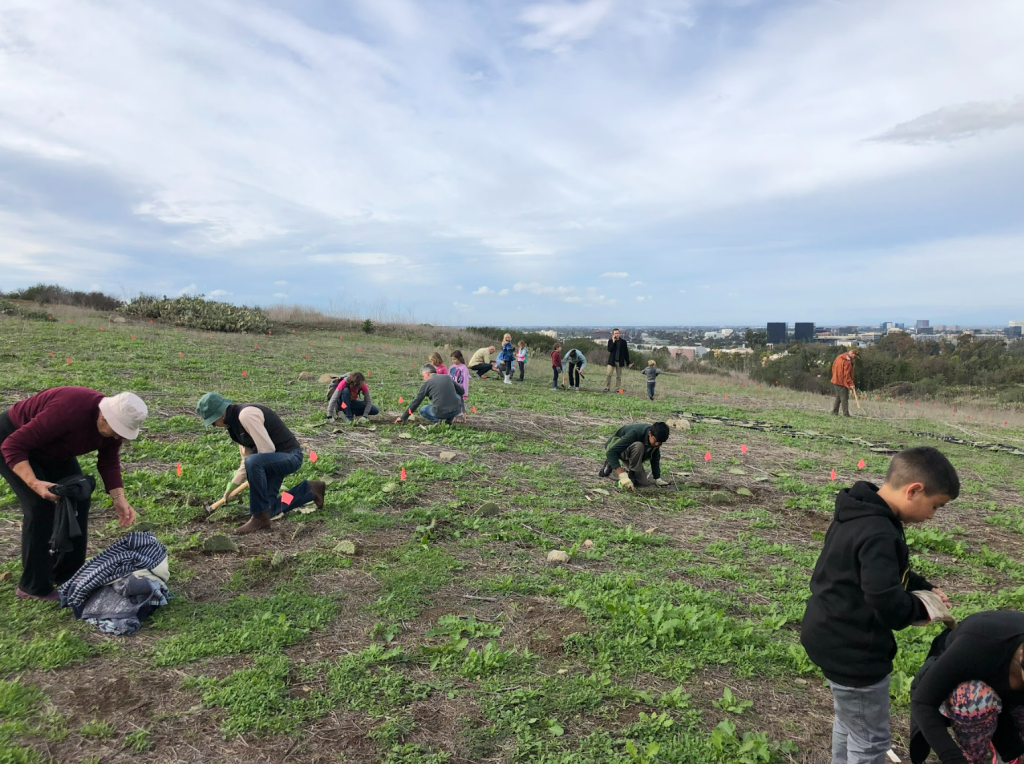
A common practice in vegetation within 100-170 feet of homes or the ‘fuel modification zone’ is planting non-native, often highly invasive succulents or mowing weedy species to comply with standards for reduced fire risk. However, these practices result in areas of low habitat value that can facilitate the spread of invasive plants to other sections of the natural area. This project was designed to demonstrate a fuel modification zone that reduces fire risk while also providing wildlife habitat. By planting Coastal Prickly Pear (Opuntia littoralis) and Coastal Cholla (Cylindropuntia prolifera) we can create nesting habitat for the Coastal Cactus Wren, a species of special concern and a target for coastal sage scrub habitat conservation. With the help of dedicated staff, community volunteers, and student interns we were able to plant over 1600 cactus pads!